Ill-Posed

Knowing vs. Understanding: Humans and Machines in Puzzle-land

We can use puzzles as a philosophical playground to think about the nature of insight, and compare human and artificial approaches. And we can explore what understanding means to us as human beings—both when we struggle toward it ourselves, and when we share it with each other.

blog — Proofs and Prompts
27 Sep 2026
#mechanistic-interpretability #philosophy-of-mathematics #cognitive-science
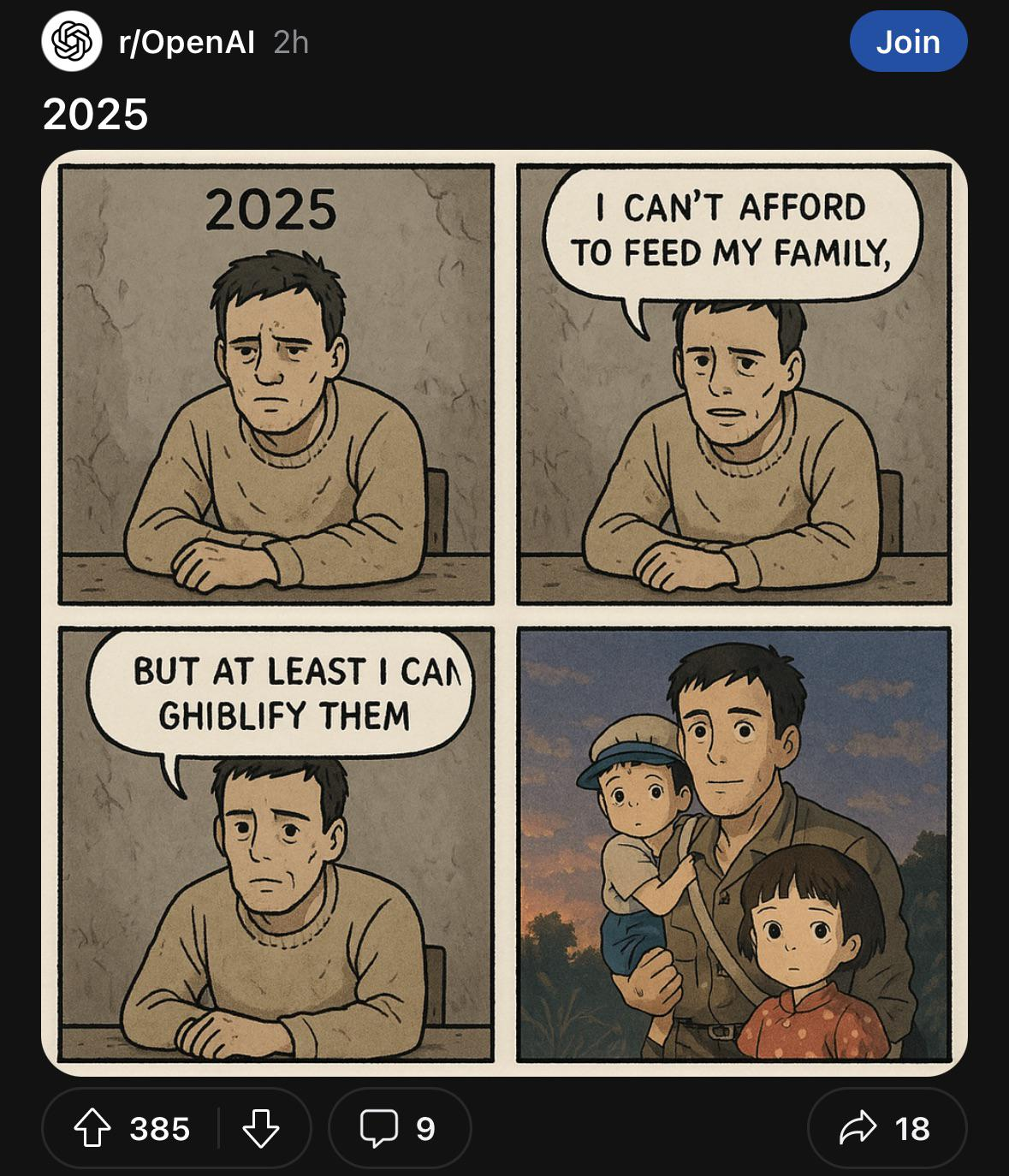
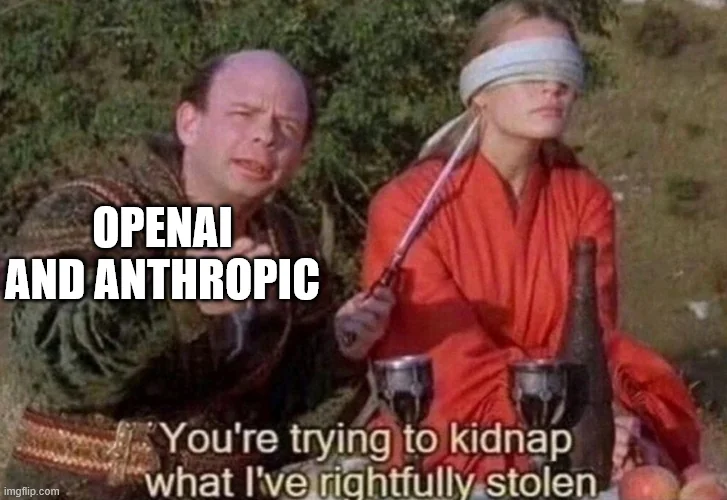
When the students ask him to explain the solution he replies, "ChatGPT (GPT-5.6) was used for foundational research and…

When the students ask him to explain the solution he replies, "ChatGPT (GPT-5.6) was used for foundational research and proof development. The underlying mathematical ideas are the author’s. The author reviewed the final manuscript, read every proof, and takes full responsibility for its content."

bluesky — Alexander Kasprzyk
27 Sep 2026
#llm-applications #academic-integrity #ai-mathematics-interaction

On using LLMs without telling which ones

Some Mathematician. Some mathematicians don’t use LLMs at all. Some others use LLMs and desire to state which models they use in their papers. But if you use LLMs and do not hold this desire, you may choose to state “I used some LLMs to do this and that” without specifying which models you used. […]

blog — Proofs and Prompts
26 Sep 2026
#machine-learning #mathematical-research #professional-ethics

A value-based approach to mathematics

[This is a guest post by Ivan Corwin. This blog post was initially written in a different file format and converted using AI. — T.] Mathematics and those mathematicians who guide its development have been central to societal advancement since antiquity. AI, like many tools that were invented by mathematicians (e.g., the abacus, slide rule, […]

blog — Terence Tao
26 Sep 2026
#mathematics-profession #mathematical-philosophy #ai-mathematics-intersection

A new metric for 'interesting' math theorems cuts overlap with Mathlib from 91.9% to 30.6%

A new metric for 'interesting' math theorems cuts overlap with Mathlib from 91.9% to 30.6% Researchers define a theorem's intrinsic interestingness as the ratio of its proof length to its statement length, then use a 27B model built on that metric to generate genuinely novel theorems instead of…

bluesky — Glonce
26 Sep 2026
#machine-learning #formal-verification #automated-reasoning

ICIAM Statement on Mathematics and Artificial Intelligence

Just a quick post to note that the International Council for Industrial and Applied Mathematics (ICIAM) has released a statement on mathematics and artificial intelligence (as well as a longer version), which makes many points echoing several already made recently here and elsewhere. The longer statement also makes reference to a recent statement by the […]

blog — Terence Tao
25 Sep 2026
#applied-mathematics #ai-mathematics-foundations #policy-research

SciAm displays hilarious double standards.

SciAm displays hilarious double standards.

Now that AI solved it, the forced option Buckmaster was working on, and Córdoba and Martínez-Zoroa were praised for, became the "wrong" problem.

Also, for the Euler problem, OpenAI solved the "right" problem and Buckmaster the "wrong" one.

bluesky — Pekka Lund
25 Sep 2026
#ai-mathematics #research-integrity

Recommendations of the Summit on PhD Math Education in the Age of AI

[This is a guest post by Bryna Kra and Rachel Ward. -T.] The Summit on PhD Math Education in the Age of AI was held September 17–18, 2026, at Harvard’s Center of Mathematical Sciences and Applications (CMSA). It brought together twenty-four senior mathematicians from across the discipline, along with several current PhD students and postdocs, […]

blog — Terence Tao
25 Sep 2026
#mathematical-education #ai-mathematics-integration #research-policy

Dear conferences, journals, and hiring committees: don’t wait for everyone else

Amit Harlev, PhD student at the Cornell Center for Applied Mathematics In the last half year there has been a massive shift in the “Math and AI” discourse, primarily driven by changes in AI capabilities. In almost no time at all the collective opinion went from “AI can’t do research level mathematics” to “AI can […]

blog — Proofs and Prompts
25 Sep 2026
#machine-learning #ai-assisted-research #mathematical-practice

Did anyone see that " math taunt" from the Iranians aimed at the Orange Guy? The math equation was posted by Mohammad Ba…

Did anyone see that " math taunt" from the Iranians aimed at the Orange Guy? The math equation was posted by Mohammad Bagher Ghalibaf, the Speaker of the Iranian Parliament and a chief negotiator of Tehran. Ghalibaf fired what international media dubbed a "maths missile" on social media. Ghalibaf posted a modified version of the Taylor Rule, a famous 1993 formula created by economist John Taylor t…

mastodon — B Thoreau 🛸
25 Sep 2026
#political-communication

We’re gonna need a lot more mathematicians

[This is a guest post by Amit Sahai. This blog post was initially written in a different file format and converted using AI. — T.] When I was an undergraduate student, I remember talking with several students who felt that the pace at which the top students could understand new math concepts was far too […]

blog — Terence Tao
25 Sep 2026
#mathematics-education #professional-commentary

Rulers of the childless land: A response to the AGMAI

Vladimir Lazić, Professor of Mathematics at Saarland University. Most days, for the last six months, I wake up feeling shame for the field we have become. Lined up towards a future most of us have not chosen; showing resistance on paper: signing petitions, creating initiatives, shouting in the wind. Led by people with no shame. […]

blog — Proofs and Prompts
24 Sep 2026
#research-culture #mathematics-profession #ai-mathematics-debate

All the math we will not see

Alessandro Della Corte, Professor at Università di Camerino, and initiator of \begin{proof} Imagine that in Babylon, 600 BC, they had today’s AI technology: deep learning, transformers, GPUs. The training data would consist only of pre-Greek mathematics, like ancient Egyptian and Babylonian mathematical traditions. I doubt that anyone, given only those ingredients, would believe that this […]

blog — Proofs and Prompts
24 Sep 2026
#ai-mathematics #philosophy-of-mathematics #mathematical-discovery

Ok, we agree there needs to be regulation.

Ok, we agree there needs to be regulation.

We disagree on the capabilities. It's not true that OpenAI simply "yoinked" the results of a mathematician. From Buckminster's own statement, the majority of the work he was doing was to make the verified proof by another LLM suitable for publication.

bluesky — andrewkchan.bsky.social
24 Sep 2026
#ai-assisted-mathematics #formalization #llm-capabilities

Forecasters were mostly wrong about AI.

Forecasters were mostly wrong about AI.

On capabilities

  • Claimed Millennium Prize problem solution (September 2026 claim by OpenAI re Navier–Stokes, targeting end of 2027, awaiting verification from prize organization; forecast: 10% [experts] and 5% [SF])
bluesky — Kol Tregaskes
24 Sep 2026
#ai-capabilities #ai-forecasting
[IMAGE]

AI.MATH With the AI.MATH initiative, we put forward draft positions on the future of mathematical research and mathemati…

AI.MATH With the AI.MATH initiative, we put forward draft positions on the future of mathematical research and mathematics degree programmes in the age of AI, alongside questions and possible answers. This is an initiative from Claudia Alfes , Thomas Nikolaus , and Andreas Thom. https://ai.math.ms/en/ also see: https://proofsandprompts.com/2026/09/23/ai-math-announcement/ #research #math #AI

mastodon — MottG
24 Sep 2026
#research-methodology #mathematical-education #ai-and-mathematics

Headlines and inside stories: understanding and trust in AI for mathematics, science, and engineering

[This is a guest post by Tapio Schneider. This blog post was initially written in a different file format and converted using AI. — T.] [This will be cross-posted on the CliMA blog.] The apparent proof of finite-time blow-up of the forced Navier-Stokes equation, announced by OpenAI on September 8, has brought into focus a […]

blog — Terence Tao
24 Sep 2026
#ai-mathematics #trust-verification #machine-learning-proofs
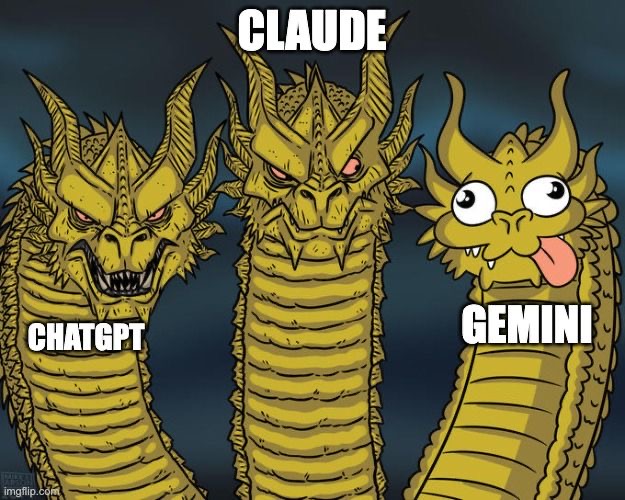
original
23 Sep 2026
#claude #chatgpt #gemini #dragons

One difference is that referees for journals are anonymous. If one of us rushes to build on one of OpenAI's papers befor…

One difference is that referees for journals are anonymous. If one of us rushes to build on one of OpenAI's papers before anyone else gets the chance, it will be very public.

More generally, I think, and indeed hope, the whole idea of being admired for "winning races" is coming to an end soon.

bluesky — Timothy Gowers
23 Sep 2026
#academic-publishing #research-ethics #ai-development

AI.MATH: announcement

AI.MATH initiators With the AI.MATH initiative, we put forward draft positions on the future of mathematical research and mathematics degree programmes in the age of AI, alongside questions and possible answers. These are starting points for discussion. We also aim to make room for the uncertainties, hopes and concerns associated with this change. Received 23 […]

blog — Proofs and Prompts
23 Sep 2026
#ai-mathematics #research-methodology #mathematical-education
← newerpage 8 of 19older →